I’ve no idea, but it sounds like the questioner might already know the answer.
It turns out that the code of lead is an indication of its thickness, helpfully expressed as weight – code 3 weighs around 3lbs per square foot (pleasantly non-metric units for our medieval building), code 4 4lbs and so on. Commercial lead goes up to about code 5, after that you need a specialist supplier.
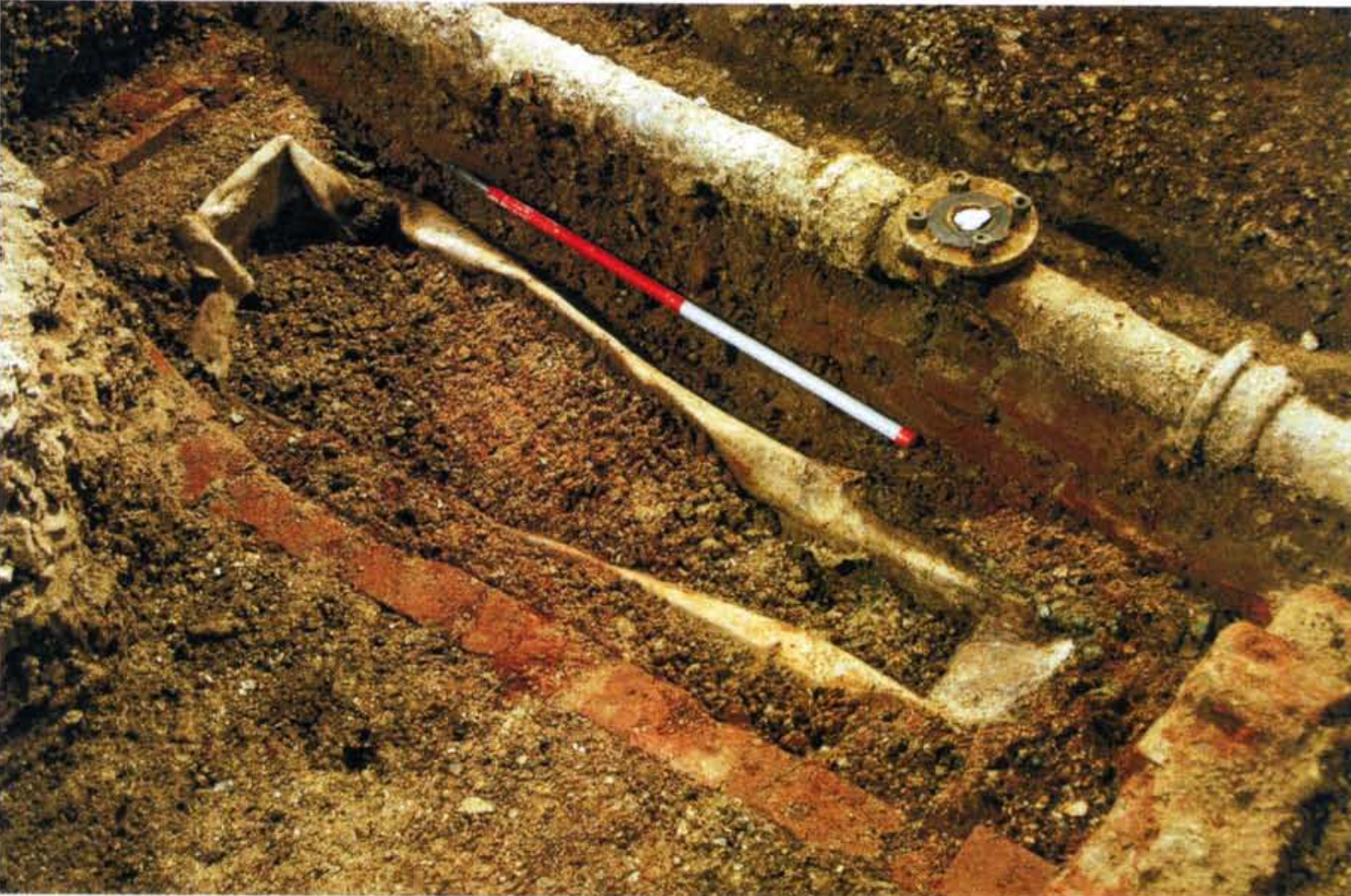
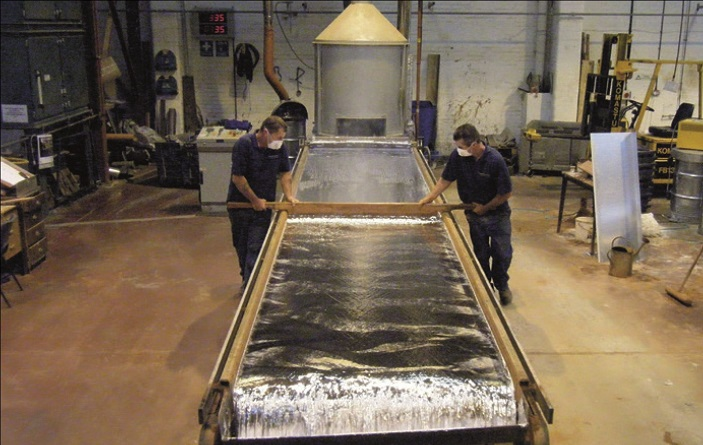
Our lead is between code 8 and 10. If you look carefully at the piece of lead we have on display in the tower, you can see that one side is speckled, and that is because our lead is cast on a bed of sand. We had our own casting bed while the Major Repair Project was underway, but now we use one of the few specialist firms still producing sand-cast lead.
This video from the Lead Sheet Training Academy (why are you unsurprised to find that such an organisation exists) has some nice splashy pictures of molten lead.
…and for anyone who prefers reading to watching videos, this is a great article:
https://www.buildingconservation.com/articles/sandcast_lead/sandcast_lead.html.
We are told that cast lead is stronger. Other people believe that the rolling process is better at removing impurities and air bubbles. The debate can continue, but meanwhile some other questions get asked:
Where did the lead come from?
How is the lead attached to the roof?
How old is our lead?