A new answer to the question “are people buried under the floor?”
You may remember that one of the Key Salisbury Facts is that the water table is usually between 2’ and 4’ below the cathedral floor – the water level can be seen at the “Dipping Point” near the central crossing.
So I assumed that no, we can’t bury people under the floor because they would just float to the surface.
When they installed the font in 2008 they had to dig under the floor, and they took the opportunity to have a look and see exactly what was down there. The report is here and it looks like the guides’ handbook needs a bit of updating.
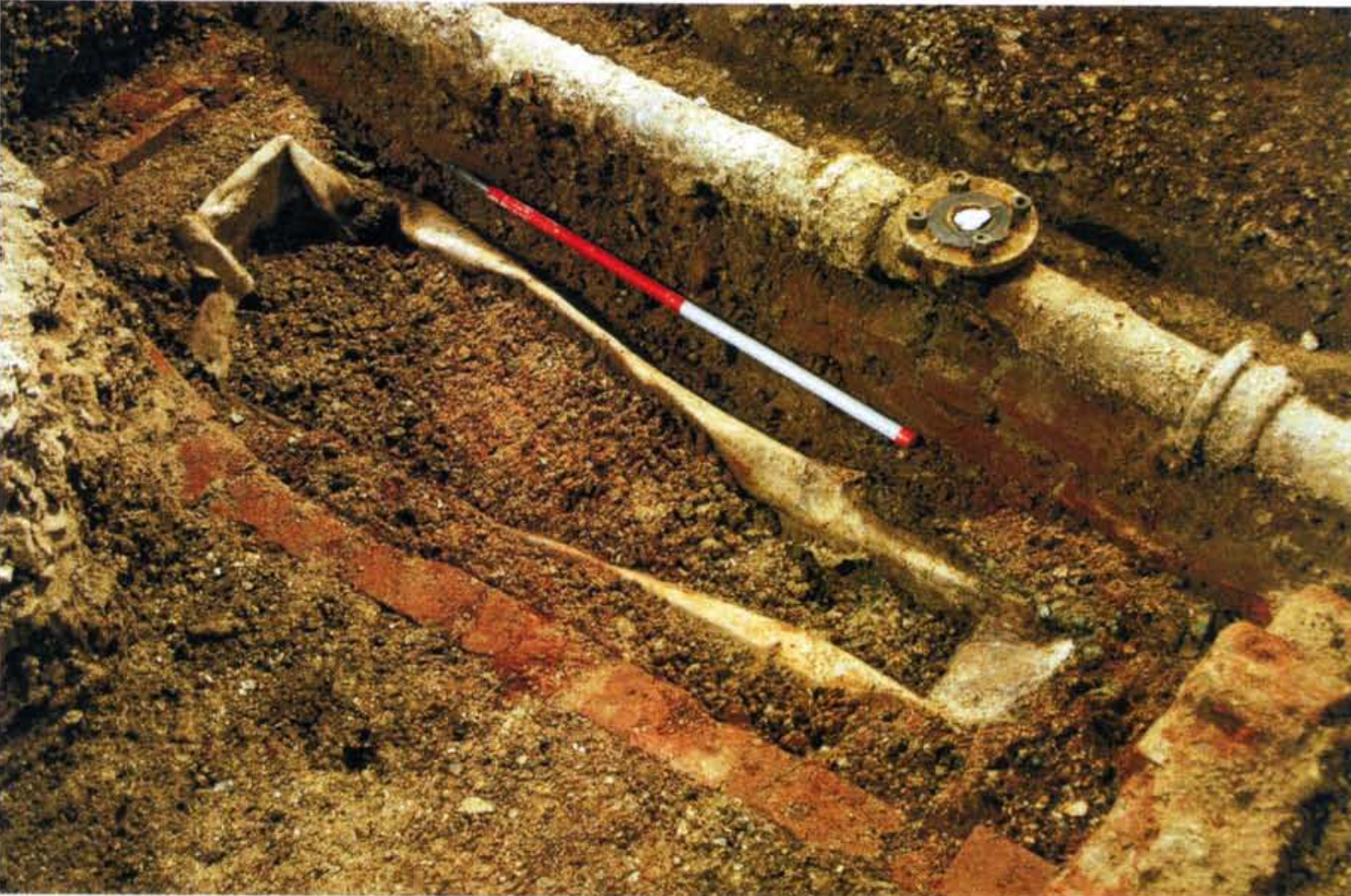
 This picture of the excavation is taken from the upper levels of the cathedral looking down and south across the place where the font will be, with the channel for water running towards the cloisters at the top of the picture.
The excavation generally went about 35cm down, to the depth needed for the font channels, and so did not touch the water table.
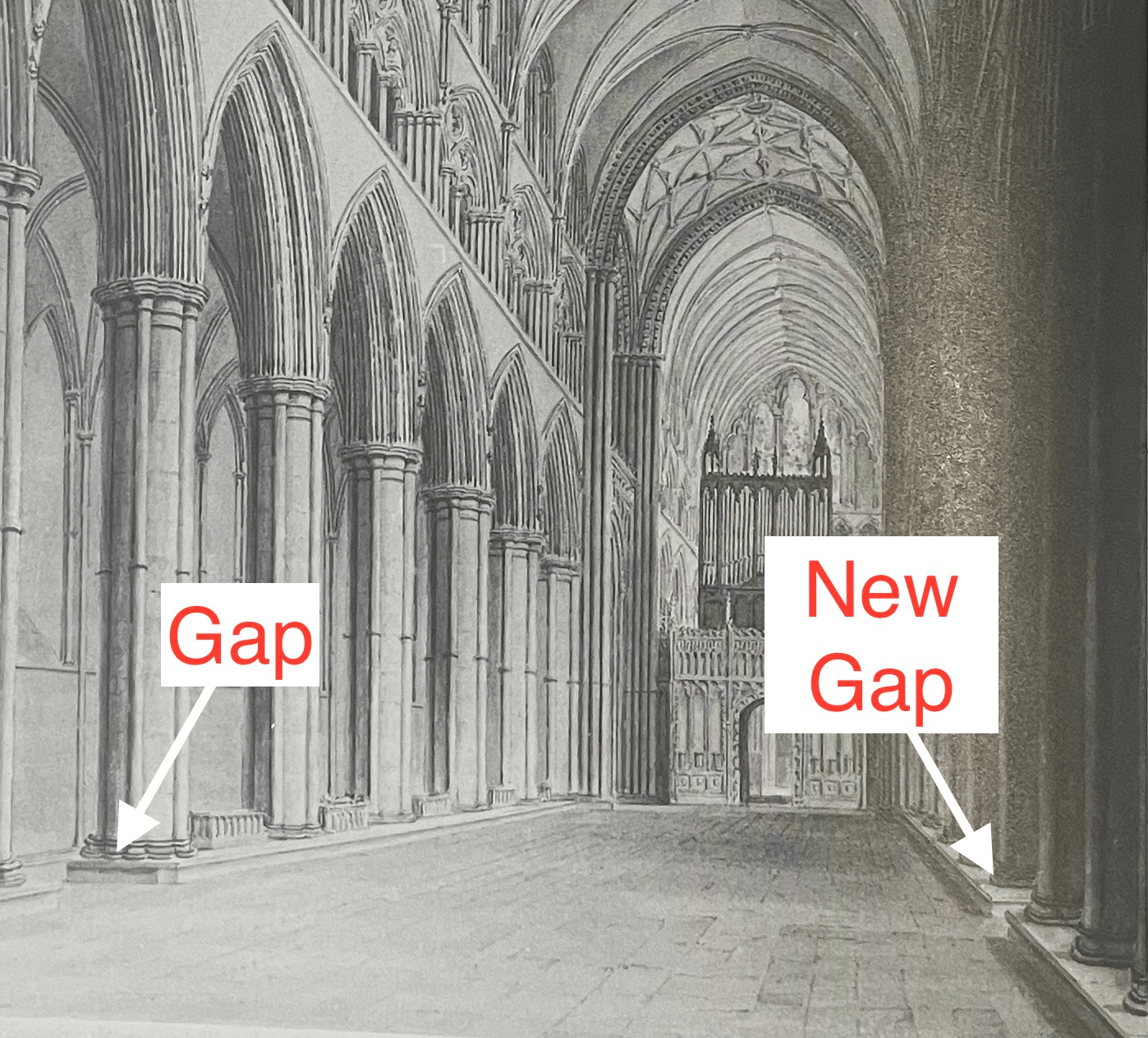
Between the two pillars they found the bottom 16cm of a medieval grave, and they say that this would originally have been cut into the arcade plinth, in a similar way to the various bishops’ tombs either side, giving a total depth of 77cm (2’6″). More of these tombs are still present under the large monuments which Wyatt moved on top of them.
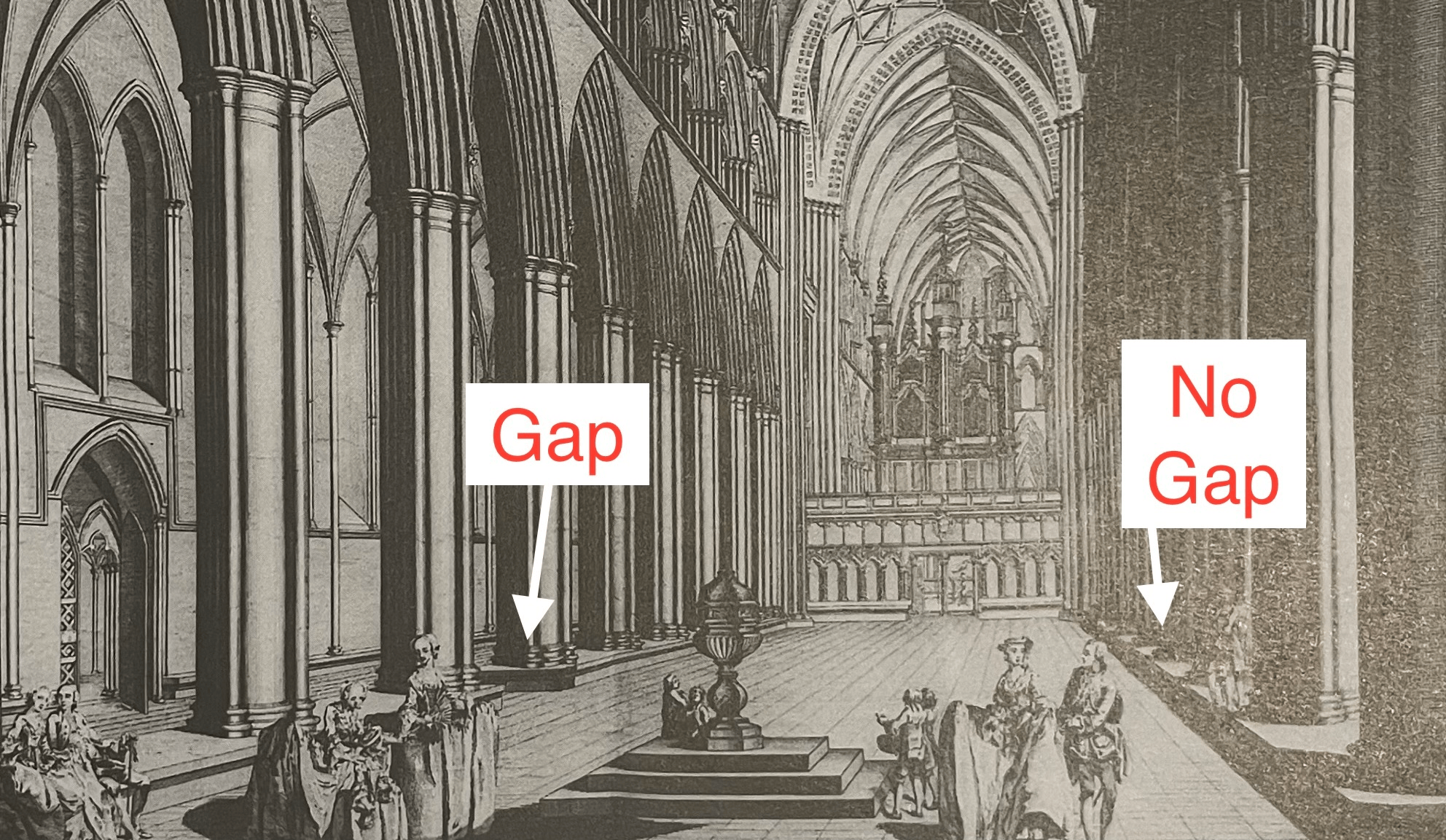
The plinth itself was removed from this gap by Wyatt in 1790, as they evidence with a fine piece of detective work on pictures of the nave drawn in 1754 (continuous plinth) and 1810 (gap).
 As they moved on towards both the nave and aisle they found many more graves, the earlier ones built with chalk walls, the later ones with brick walls. The graves are around 3’6″ deep, and look as though the ledger stones* on top of them would have formed the roof, keeping the coffins above the water level. The coffins are often wood but sometimes three layers of wood/lead/wood. One coffin had a legible label on it, Edward Rudge who died in 1790, and that matches a nearby ledger stone. Some of the vaults overlap with older ones.
*Ledger stones are those flat tombstones scattered all over the floor of the cathedral.
So the answer is yes, they did bury people in the cathedral and very many of them are still there.
The report makes very interesting reading and leads to at least two further questions:
What is under the main pillars?
What was the Paving Project of 1878?
And of course if you haven’t already asked this one: What did James Wyatt do?